 en
en  cn
cn  it
it  es
es  tr
tr  ja
ja  sv
sv  pt
pt  nl
nl  ru
ru  fr
fr  de
de  pl
pl 
Serving global fashion brands
as the core supply chain of excellence, agility, and innovation.
as the core supply chain of excellence, agility, and innovation.
24 Dec 2025 / Industry
When brands discuss production with a garment manufacturer, one of the first questions is often simple: How many garments can you produce?
The answer, however, does not always tell a brand how much capacity is actually available for its order. A manufacturer's total production capacity may include capacity already committed to other customers, while the remaining capacity may not match the quantity, product requirements or timing of a new order.
For this reason, apparel production capacity should be evaluated in relation to a specific order rather than as a single production number. Brands need to understand how much capacity exists, how much is already committed, what remains available and whether that capacity can be allocated to the order within the required production period.
A factory may quote a daily or monthly production figure to describe its output. This can provide a useful reference, but it does not necessarily represent the capacity available to a new customer.
The first distinction is between manufacturing capability and production capacity. Manufacturing capability describes what a manufacturer is equipped and experienced to produce. Production capacity describes how much production can be handled within a particular period. A manufacturer may have the capability to produce jackets, blazers, trousers and other woven garments, for example, but that does not mean all of its production resources are available for a new jacket order at the same time.
A more useful capacity discussion separates four terms: total production capacity, committed capacity, available production capacity and allocated capacity. Total capacity represents the overall production potential. Committed capacity has already been assigned to existing orders. Available capacity is what remains, while allocated capacity is the portion ultimately assigned to a specific order.
This distinction gives brands a more realistic starting point than looking only at a manufacturer's maximum output.
Production capacity depends on the resources available to support production during a given period. Personnel, equipment, facilities and working hours all contribute, but these resources need to be considered together with existing commitments and the requirements of the products being produced.
For example, having a certain number of production workers or machines does not automatically mean that the same amount of capacity is available for every type of garment. Different products can require different resources, and some production resources may already be assigned to other orders.
This is why apparel manufacturing capacity should be discussed in terms of what can realistically be supported during the relevant production period. The question is not simply how many resources a manufacturer has, but how much production those resources can support for the orders that need to be made.
For brands, this also means that a manufacturer's manufacturing scope and its available capacity should be considered separately. A broad manufacturing capability does not by itself indicate how much capacity can be assigned to a particular order.
A manufacturer's total capacity is rarely completely open. Existing customer orders may already occupy part of that capacity, particularly during periods of high demand.
This creates a simple relationship:
Total Capacity − Committed Capacity = Available Capacity
The calculation is conceptual rather than a fixed production formula. Its purpose is to show why a large total capacity figure may provide little information about what a new order can actually use.
Committed capacity can include current customer orders, previously scheduled production and resources already assigned to specific products. Seasonal demand can also affect how much capacity remains open during a particular period.
For a brand, the more useful question is therefore not “What is your total capacity?” but “How much capacity is available during the period when our order needs to be produced?”
That difference can have a direct effect on whether an order can be accommodated as planned.
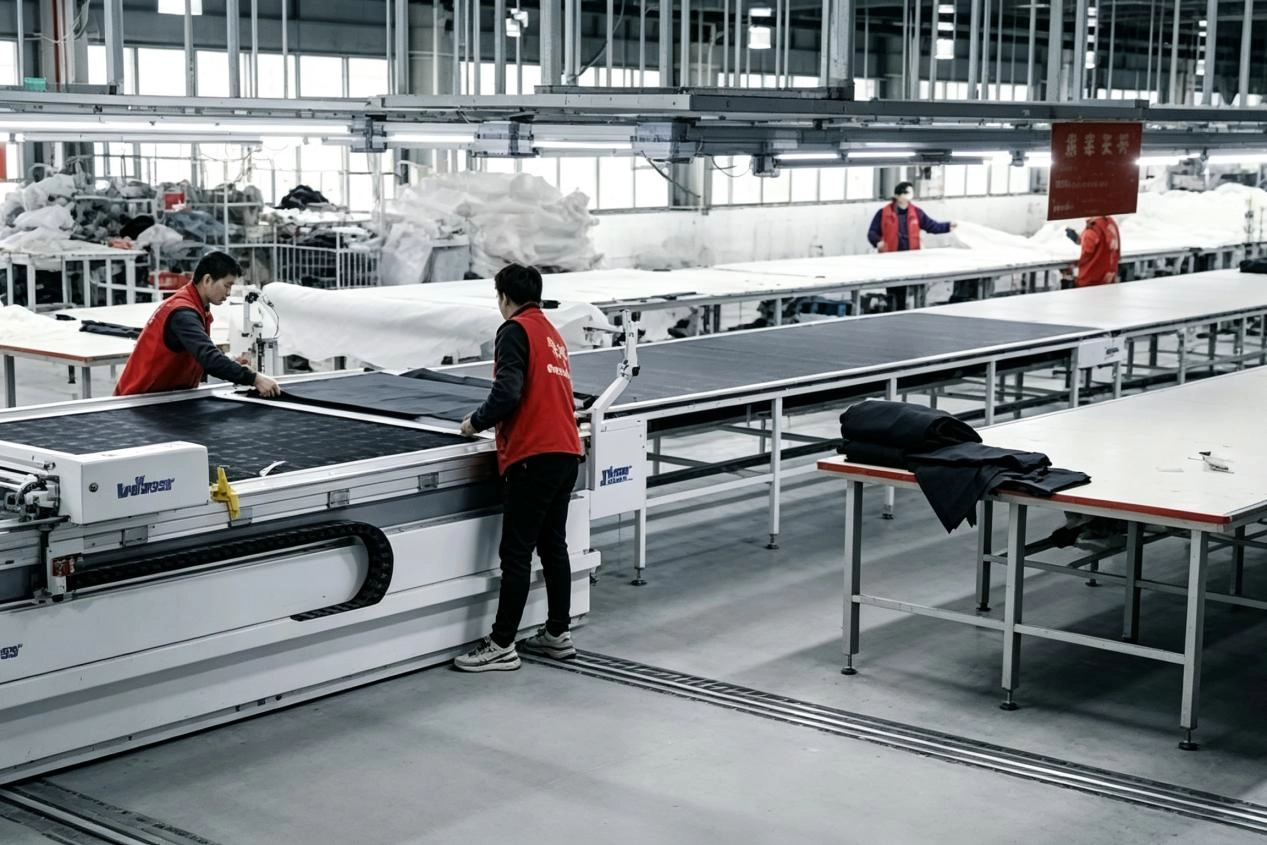
Once available capacity is understood, it needs to be compared with the actual requirements of the order.
Order quantity is one part of this assessment, but the available capacity also needs to be considered against the number of styles, product requirements and production period involved. An order needs to fit the manufacturer's available resources as well as the period in which those resources are required.
Timing is therefore an important part of capacity planning. Capacity that remains available during one production period may not be available during another. Even when a manufacturer has sufficient overall capacity, the relevant capacity still needs to be available when the order is scheduled for production.
This is why available production capacity should be considered in relation to both the order requirements and the required production window. The key question is whether the available capacity can support the order within the period in which production needs to take place.
Quantity is easy to measure, which is why it often becomes the main number in capacity discussions. But quantity alone cannot describe the production requirements of an order.
Consider two orders with the same total number of garments. One may involve a single style with limited variations, while the other may include several styles, colors and sizes with different construction requirements. Both orders contain the same number of pieces, but they may require different production resources.
The same applies to the product mix. An order made up of several garment categories can require a broader range of resources than an order focused on one consistent product.
For this reason, brands should provide enough information about the order for a manufacturer to make a realistic capacity assessment. Quantity remains important, but it needs to be considered alongside the products and requirements that make up that quantity.
Product characteristics can also affect how much capacity an order requires.
A simple woven shirt, a structured blazer and a technical jacket do not necessarily place the same demands on production resources. Construction details, components and specialized requirements can change the resources needed to produce the garments.
This is particularly relevant for woven apparel. Jackets and blazers may include multiple panels, pockets, closures and structured construction. Trousers may have different waistband and pocket requirements, while other woven products may require their own specific construction resources.
The point is not that a more complex garment always requires a fixed amount of additional capacity. Rather, garment production capacity needs to be assessed according to the actual products involved.
A manufacturer may have sufficient overall capacity for an order in terms of quantity, but the available resources during the required period still need to match the characteristics of the garments being produced.
For brands evaluating a manufacturer, this is one reason it can be useful to look beyond a headline capacity figure and understand the manufacturer's actual product scope. KINGSRICH provides an overview of its manufacturing capabilities across different apparel categories.
Having enough total capacity does not necessarily mean having that capacity available immediately.
A manufacturer may have sufficient capacity to handle a particular order over a longer period, but if the available capacity is already committed during the brand's required production window, the order may need to be scheduled later.
This is where several capacity terms need to be kept separate. Production capacity refers to how much production can be supported. Available capacity refers to the capacity that remains uncommitted during the required production period. Allocated capacity refers to the portion assigned to the specific order. Lead time is influenced by when the required capacity can realistically be allocated within the production schedule.
These concepts are connected, but they are not interchangeable. A manufacturer can have substantial total capacity while having limited capacity available for a new order at a particular time.
For brands, this makes the timing of capacity allocation just as important as the total production figure. The relevant question is whether the required capacity can be reserved within the production period needed for the order.
Before placing a bulk order, brands should ask questions that reveal the difference between quoted capacity and capacity that can actually be used.
Question | Why It Matters |
How much capacity is available during the required production period? | Shows whether the order can fit the intended production window. |
How much capacity is already committed? | Helps distinguish total capacity from capacity that remains available. |
How is capacity assessed for different garment types? | Product requirements can change the resources needed for an order. |
When can the required capacity be allocated? | Connects available capacity with the timing of the specific order. |
What information is needed for a realistic capacity assessment? | Helps the manufacturer evaluate the order based on actual requirements rather than quantity alone. |
These questions also give brands a better basis for comparing manufacturers. A large production number may look attractive, but it is less useful if the available capacity does not fit the order.
Brands should also confirm which product categories the quoted capacity actually applies to, since capacity requirements can vary across garment types.
The largest production number is not necessarily the most useful number for a brand.
A better assessment starts with the manufacturer's total production capacity, then considers how much is already committed, how much remains available and whether that available capacity matches the requirements of the order. Only after these factors are considered does it make sense to discuss the capacity that can be allocated to the specific order.
The evaluation can be viewed as:
Total Capacity → Committed Capacity → Available Capacity → Order Requirements → Allocated Capacity
This approach gives brands a clearer picture of what a manufacturer's capacity actually means for their order. It also helps avoid a common mistake: treating maximum output as if it were immediately available production capacity.
Capacity should be evaluated by order fit—not by the largest number a manufacturer can quote.
Apparel production capacity refers to the amount of garment production that a manufacturer can support within a specific period using its available production resources.
Total production capacity represents the manufacturer's overall production capacity, while available production capacity is the portion that remains after existing production commitments have been considered.
Factors include available personnel, equipment and facilities, working hours, existing commitments, order quantity, product requirements and the production period in which the order needs to be completed.
Brands should consider total capacity, committed capacity, available capacity, order requirements and the timing of capacity allocation rather than relying only on the manufacturer's maximum production figure.