 en
en  cn
cn  it
it  es
es  tr
tr  ja
ja  sv
sv  pt
pt  nl
nl  ru
ru  fr
fr  de
de  pl
pl 
Serving global fashion brands
as the core supply chain of excellence, agility, and innovation.
as the core supply chain of excellence, agility, and innovation.
11 Dec 2025 / Industry
Maintaining quality during bulk production is more challenging than achieving the required standard in a single approved sample. Once production starts, the same measurements, construction details and workmanship standards need to be repeated across hundreds or thousands of garments. A small variation that is easy to correct on one piece can become a recurring defect if it is not noticed early.
This is especially important for woven garments such as jackets, blazers, overshirts and trousers. Details like pocket placement, zipper alignment, button positioning, panel matching and stitching can affect both appearance and fit. For this reason, garment quality control needs to continue throughout production rather than being left to the final inspection.
Final inspection checks whether finished garments meet the agreed requirements, but it comes late in the process. If a problem is found after a large quantity has already been produced, correcting it can mean additional inspection, rework or replacement of components. In some cases, the issue may also affect the delivery schedule.
Quality control during bulk production takes a different approach. Manufacturers monitor production as it continues so that problems can be identified before they spread. The goal is not only to identify individual defects, but to keep production aligned with the approved standard and respond when meaningful variations appear.
For a brand, this distinction matters. A final inspection can identify defective garments, but it cannot change the fact that the same defect may already exist across a larger quantity. Effective quality control in garment manufacturing therefore depends on controlling quality during production as well as checking the finished order.
Before bulk production begins, the manufacturer needs a clear reference for the approved garment. This normally includes the approved sample together with the relevant measurements, tolerances, construction details, materials and finishing requirements. The purpose is simple: everyone involved in production should be working toward the same result.
For woven apparel, small construction details can make a visible difference. A jacket may require consistent pocket placement and zipper alignment. A blazer may need accurate panel matching and balanced construction. On an overshirt, button positioning and stitching can affect the overall appearance, while trousers require consistent measurements and construction across different sizes.
This is where sample approval provides the production reference that bulk manufacturing needs. For a closer look at this stage, see KINGSRICH's guide to garment sample approval before bulk production. The aim is not to create more paperwork, but to make sure production requirements are clear before larger quantities are made.
A small production issue is not necessarily a serious problem when it is found early. The risk comes when the same issue continues without being noticed. One jacket with a misplaced pocket can be corrected. If the same pocket position is repeated across a production run, a much larger quantity may need to be checked and corrected.
Early identification allows the manufacturer to determine whether a defect is isolated or recurring. If several garments show the same variation, the issue needs more attention because it may indicate that production is no longer following the approved requirement.
This is one of the main reasons garment inspection should not be viewed only as a final check. Finding a repeated problem while production is still running gives the manufacturer more options for containing it and limits the number of garments that may be affected.
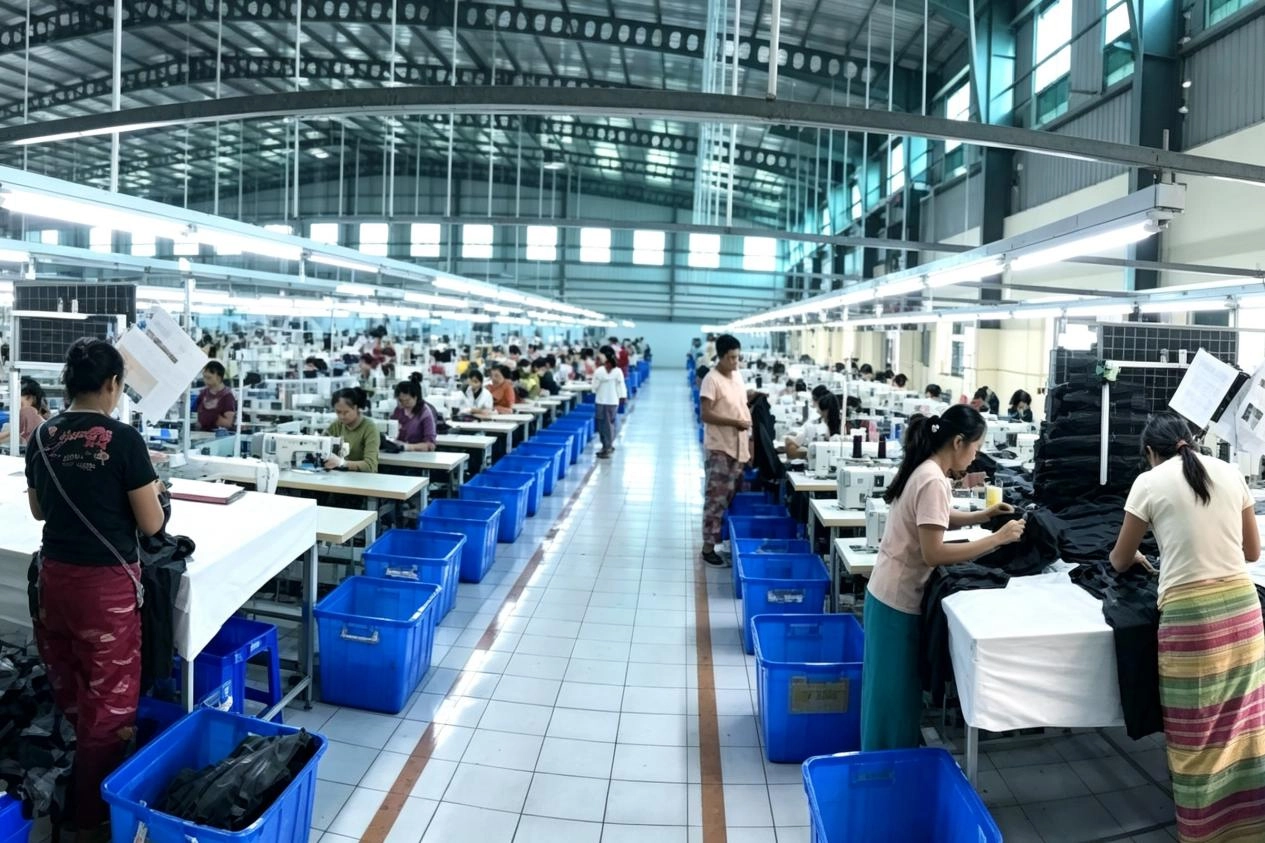
Once production is underway, quality needs to be monitored against the approved standard. In-process quality control helps manufacturers see whether important characteristics remain consistent as more garments are produced.
The focus depends on the product. For a structured jacket, this may include measurements, pocket and zipper positioning, panel alignment and stitching. For trousers, measurement consistency, waistband construction and pocket placement may be more important. The same principle applies across sizes and colors: the finished garments should continue to match the approved requirements rather than gradually developing visible differences.
The purpose is not to create a long inspection checklist. It is to notice changes in production output. If the first group of garments meets the required standard but later pieces begin to show the same variation, that change needs to be addressed before it becomes a larger issue.
Finding a quality problem is only part of the job. Once an issue has been identified, the manufacturer needs to understand the underlying cause, make the necessary correction and verify that subsequent production has returned to the required standard.
For example, if zipper alignment on a jacket is repeatedly inconsistent, correcting the affected garments may not be enough. The manufacturer also needs to check whether subsequent production has returned to the expected standard. The same applies to recurring issues with button positioning, pocket placement or measurements.
This makes corrective action an important part of garment quality inspection. A problem should not simply be recorded and closed. The result of the correction needs to be checked in later production so that the same issue does not continue.
The larger the order, the more important consistency becomes. A bulk order may include several sizes, colors or product variations, and production continues over a longer period. The approved standard therefore has to remain stable across the entire run.
These consistency challenges can be especially visible in woven garments. A jacket with multiple panels and construction details needs consistent alignment from one garment to the next. A blazer may show differences in proportion or panel matching more clearly than a simple garment. Trousers need stable measurements across sizes, while overshirts still require consistent button placement, stitching and construction.
Quality is therefore not only about whether individual garments pass inspection. It is also about whether the entire order continues to meet the same approved standard from the first piece to the last.
Brands sourcing woven products can also benefit from understanding why these garments require more specialized manufacturing knowledge. KINGSRICH covers this topic in its guide to woven garment manufacturing.
Final inspection remains an important part of garment quality control, but it works best when it confirms quality rather than discovers major problems for the first time.
At the end of production, finished garments can be checked against the approved requirements before the order is released. This provides a final opportunity to identify defects that may have remained unnoticed during production.
However, late discovery can be costly. If a recurring construction problem is found after most of the order has been completed, the manufacturer may need to inspect a larger quantity, carry out rework or replace components. This can also put additional pressure on the delivery schedule.
Managing quality during production reduces this risk. Final inspection then serves as an important final check rather than the only point at which quality is evaluated.
When evaluating a garment manufacturer, brands should look beyond the question of whether final inspection is carried out. It is more useful to understand how quality issues are handled while the order is being produced.
Question | Why It Matters |
How are recurring defects identified? | Shows whether problems are noticed before they affect larger quantities. |
How are corrective actions verified? | Indicates whether the manufacturer checks that an issue has actually been resolved. |
How is consistency monitored during production? | Helps confirm that the approved standard is maintained throughout the order. |
How are different sizes and colors controlled? | Shows whether variations within the order are considered during quality control. |
What happens when production differs from the approved requirements? | Gives brands a clearer view of how deviations are managed. |
These questions are particularly relevant when sourcing woven garments, where construction details and visual consistency can have a direct effect on the finished product. KINGSRICH lists woven outerwear and other woven apparel among its manufacturing capabilities, with quality and delivery assurance forming part of its broader manufacturing approach. Brands can review its manufacturing capabilities when assessing its product and production scope.
Consistent quality cannot be achieved through final inspection alone. It depends on having clear requirements, identifying problems early, monitoring production output and following corrective actions through to verification.
For bulk garment production, the key is to prevent small variations from becoming repeated defects. This is particularly important for woven jackets, blazers, overshirts and trousers, where measurements, alignment and construction details can strongly affect the finished result.
For brands, a useful quality question is not simply whether a manufacturer can find defects at the end of an order. It is whether the manufacturer has a practical approach to identifying and controlling quality issues while bulk production is still underway.
They maintain quality by working from clear approved requirements, checking production during the run, identifying recurring issues early and verifying corrective actions before the same problem affects more garments.
It is the ongoing monitoring of garments while bulk production is taking place. It helps identify variations and recurring defects before they become larger problems.
It allows manufacturers to find and address quality issues while production is still running. This can reduce the quantity affected by a recurring defect and limit unnecessary rework later.
Brands should ask how the manufacturer identifies recurring defects, monitors consistency, handles deviations and verifies corrective actions rather than looking only at the final inspection process.