 en
en  cn
cn  it
it  es
es  tr
tr  ja
ja  sv
sv  pt
pt  nl
nl  ru
ru  fr
fr  de
de  pl
pl 
Serving global fashion brands
as the core supply chain of excellence, agility, and innovation.
as the core supply chain of excellence, agility, and innovation.
27 Aug 2026 / Industry
A fabric can look right on a swatch and still create problems once it enters garment production. Two woven fabrics may have similar colors and compositions but behave differently during pattern development, cutting, sewing or finishing. Those differences can affect the fit, appearance, production efficiency and consistency of the finished garment.
For this reason, fabric selection for clothing is not simply a sourcing decision. It is part of manufacturing planning. The material needs to work with the garment design, construction method and production process from the first sample through bulk manufacturing.
This is particularly important for woven garments because fabric structure, weight and dimensional behavior can have a noticeable effect on how a garment is developed and produced. A suitable fabric is not necessarily the cheapest or the closest visual match. It is the material that can meet the product requirements and perform consistently throughout manufacturing.
Fabric selection influences different stages of garment manufacturing in different ways.
During product development, fabric weight and structure can affect the intended silhouette and pattern. During cutting, fabric stability and handling can influence panel accuracy. Sewing introduces another set of considerations, including seam behavior and machine handling. Pressing can take place during and after garment assembly, particularly in structured woven garments. The fabric's response to heat, steam and pressure can influence seam definition, shaping and the final appearance.
These stages should not be treated as one general issue of "fabric behavior." Each stage creates different requirements.
For a brand, this means a fabric should be evaluated against the actual garment rather than approved only because it looks or feels appropriate. A fabric that works well for a lightweight shirt may not provide the same manufacturing results in a structured jacket. Likewise, a material that performs well in a sample may require further evaluation before being used for a large production run.
The earlier these differences are identified, the easier it is to make appropriate development and sourcing decisions.
Fabric weight is one of the first characteristics that can influence how a woven garment is developed. Lightweight fabrics generally create a different drape and silhouette from heavier or more structured materials. Fabric thickness and weave structure also affect how the garment components come together.
This matters because garment patterns are developed around the intended material. If the fabric changes significantly after the pattern has been developed, the same pattern may no longer produce the expected result.
For example, a jacket developed for a structured woven fabric may lose part of its intended shape when produced in a much softer material. Using a heavier fabric for a design intended for a lightweight material can have the opposite effect, making the garment appear more rigid or changing how it sits on the body.
The relationship between fabric and product development can be considered through several characteristics:
· Weight: Influences the overall feel, drape and structure of the garment.
· Weave structure: Affects stability, flexibility and how the fabric behaves during development.
· Thickness: Becomes important where several layers or folded sections meet.
· Drape: Influences how the finished garment falls and how the intended silhouette is expressed.
· Rigidity or softness: Can affect the visual proportions and structure of the garment.
These characteristics are especially relevant when outer fabric is combined with lining or interlining. Adding layers changes the overall structure and thickness of particular areas, so material decisions need to be considered together rather than separately.
The objective is not to identify one ideal fabric weight for all woven garments. A shirt, overshirt, jacket and outerwear piece have different requirements. Woven garment manufacturing becomes more predictable when those requirements are considered during product development instead of after the pattern has already been finalized.
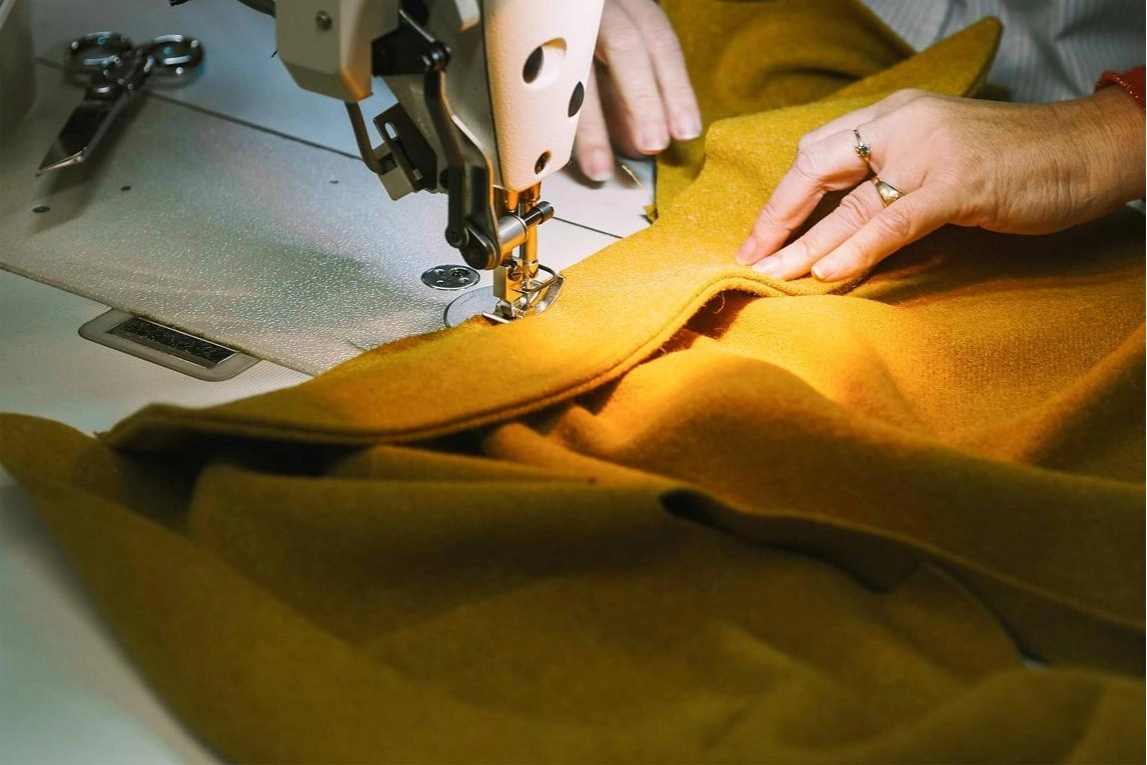
A garment can have accurate patterns and still end up with different finished measurements if the fabric does not maintain predictable dimensions during production.
Shrinkage is one of the most important factors to consider. When fabric changes size during relevant washing, steaming, pressing or finishing processes, the change can affect the final dimensions of the garment.
The effect does not have to be large to matter. A change in body length can alter the relationship between the hem and pocket position. A change in sleeve length can affect the intended fit. When similar changes occur across several measurements, the overall balance of the garment can also shift.
Dimensional stability is therefore important when comparing the sample with bulk production. If the sample and production fabric behave differently, measurements taken from the approved sample may not accurately represent the finished bulk garments.
This is why fabric approval should include consideration of how the material behaves during the relevant production process. The question is not simply whether the fabric has the correct appearance before manufacturing. It is whether its dimensions remain sufficiently predictable for the garment to meet its specifications.
It is also useful to separate this issue from finishing technique. At this stage, the main concern is the material's dimensional behavior. How heat, steam and pressure are used later in production is a separate consideration.
For manufacturers, predictable dimensional stability makes finished measurements easier to control. For brands, it reduces the risk of approving a sample based on material behavior that will not be repeated consistently during bulk production.
Once the material reaches the production floor, its handling characteristics become more apparent.
During cutting, the fabric needs to remain sufficiently stable and manageable as it is spread and cut. Materials that shift, distort or behave inconsistently can make it more difficult to maintain accurate panel dimensions.
Cutting accuracy is important because every later operation depends on the cut panels. If a panel is different from the intended pattern shape or dimension, the resulting issue may appear during assembly as a fit or construction problem.
Sewing presents different concerns. The way a fabric responds to needles, thread and machine handling can influence seam appearance and production consistency. Depending on the material and construction, manufacturers may need to pay attention to issues such as seam puckering, seam slippage or visible needle marking.
The relationship between fabric and production can be summarized more clearly by separating the two operations:
Production stage | What fabric characteristics can affect | Possible manufacturing concern |
Cutting | Stability, distortion, surface behavior | Panel accuracy and consistent cutting |
Sewing | Fabric structure, surface, thickness and handling | Seam appearance, puckering or slippage |
Layered construction | Thickness and interaction between materials | Difficulty handling multiple layers |
Matching requirements | Pattern, direction and usable fabric area | Additional cutting considerations |
Not every fabric will create these issues, and the severity depends on the specific material and garment. A lightweight woven shirt and a structured jacket, for example, place different demands on the material during sewing.
This is why fabric performance should be considered in relation to the actual construction. A fabric that performs well in a simple straight seam may require different handling when used around a collar, cuff, pocket or multi-layered section.
For manufacturers, the practical objective is to understand the material before bulk production begins and determine whether the selected fabric can be processed consistently with the planned garment construction.
Pressing can take place during and after garment assembly, particularly in structured woven garments. The fabric's response to heat, steam and pressure can influence seam definition, shaping and the final appearance.
Heat, steam and pressure can be used to establish shape, define seams and improve presentation. The response varies between materials, so the same finishing approach may not produce identical results with different fabrics.
This becomes particularly important in structured garments such as jackets and outerwear. Collar and lapel shaping, seam definition and overall garment presentation can all depend partly on how the fabric responds during finishing.
The interaction between the outer fabric, lining and interlining also matters. These materials may respond differently to heat and pressure, and their combined behavior affects the final garment.
For example, if a fabric does not respond predictably during pressing, a structured area may not hold the intended shape. A seam may also appear less defined than expected after finishing.
Finishing should therefore be considered part of material suitability rather than treated only as a cosmetic final step. The fabric needs to respond in a way that supports the required appearance and shape of the finished garment.
This is one reason apparel fabric selection should be connected with the actual manufacturing process. A fabric may have the desired color, weight and hand feel but still require further evaluation if its finishing response does not support the product.
Fabric approval does not need to become an extensive technical checklist. The more important question is whether the material is suitable for the specific garment and whether its key production characteristics are understood.
Before approval, brands should consider whether the material specification matches the intended product, whether its dimensional stability is acceptable, and whether it can be processed consistently. Its compatibility with the garment's construction, lining and interlining should also be considered.
Bulk availability matters as well. A fabric that works for sampling but cannot be supplied consistently at the required quantity creates a different type of production risk.
The main checks are therefore connected to manufacturing suitability rather than appearance alone:
· Does the fabric meet the required specification for the garment?
· Is its dimensional behavior suitable for the expected production process?
· Can it be cut, sewn and finished consistently?
· Does it work with the planned construction and supporting materials?
· Can the fabric maintain consistent specifications and performance across bulk production lots?
The exact priorities depend on the garment. A lightweight woven shirt may place greater emphasis on drape, dimensional stability and seam appearance, while a structured jacket may require closer attention to thickness, layering and pressing response.
The important point is to make the material decision with the finished product in mind.
A fabric that works well for a sample does not automatically guarantee trouble-free bulk production.
A sample involves a relatively small amount of material and a limited number of production operations. Bulk manufacturing repeats those operations across a much larger quantity. Any variation in fabric characteristics therefore has more opportunities to affect the finished garments.
Material consistency becomes especially important when the garment requires accurate matching or has multiple construction layers. Differences in fabric width, weight or dimensional behavior can influence cutting and finished measurements. Changes in surface characteristics can also affect sewing or finishing.
This does not mean that every production lot will behave differently. It means that material consistency needs to be considered when planning bulk manufacturing.
Garment fabric sourcing should therefore be connected with production requirements. The question is not only whether a supplier can provide enough fabric, but whether the material can meet the required specifications consistently throughout the order.
The same principle applies to manufacturing efficiency. If a fabric requires significantly more handling or creates additional production difficulties, that can affect processing time and quality control. A material that works smoothly with the planned construction can make the manufacturing process more predictable.
This becomes more significant for garments with complex construction. A woven jacket may combine several panels, lining, interlining, pockets, closures and structured areas. The fabric choice can influence several of these operations at once.
For brands, evaluating these factors before bulk production provides a better basis for making material decisions. The goal is not to eliminate every production variable. It is to understand which fabric characteristics matter for the garment and confirm that they are suitable for the intended manufacturing process.
A manufacturing partner with experience in both product development and production can also evaluate fabric decisions in a broader context. Kingsrich's garment development and manufacturing capabilities connect development considerations with manufacturing, helping material selection remain aligned with the requirements of bulk production.
Fabric selection can affect product development, cutting, sewing, pressing, finishing and bulk production consistency. Weight, structure, dimensional stability and other characteristics need to suit both the garment and its manufacturing process.
Fabric weight influences drape, structure, thickness and the way different garment components work together. A significant change in weight can therefore affect the appearance and proportions of a garment even when the basic pattern remains unchanged.
Fabric shrinkage can change finished garment measurements. If the production material changes dimensions during relevant processing, areas such as body length, sleeve length and other key measurements may move outside the intended specifications.
Brands should consider the fabric specification, dimensional stability, production performance, construction compatibility and consistency across bulk production lots. The material should be evaluated according to how it will perform throughout manufacturing, not only how it looks before production.