


as the core supply chain of excellence, agility, and innovation.
05 Aug 2026 / Industry
Today's unpredictable economic climate exposes extreme operational vulnerabilities within traditional single-country manufacturing setups. Unexpected localized factory shutdowns, sudden trade disputes, and labor shortages severely disrupt single-region supply networks. These unexpected disruptions force apparel brands into severe inventory shortages, missed delivery windows, and soaring freight expenses.
To mitigate these risks, fashion executives now adopt multi-country manufacturing as a vital operational strategy. Distributing production across diverse geographic regions eliminates single-point supply chain bottlenecks. This flexible model optimizes import tariffs and accelerates overall speed-to-market for modern collections. Ultimately, a strong international presence grants global fashion brands the supply chain agility and operational resilience required for sustained long-term business growth.
Single-country sourcing exposes apparel supply chains to severe structural hazards. Concentrating production within a single geographic region creates an fragile system. Localized bottlenecks quickly paralyze global operations.
Modern logistics networks require structural resilience across multiple regions. Brands relying on single-source setups risk immediate halts in inventory flow during unexpected localized crises.
Sudden policy shifts present massive obstacles for fashion companies. Unexpected tariff increases alter trade dynamics overnight. These government regulations directly elevate cost structures for overseas buyers.
International political disputes often trigger restrictive import quotas or sudden trade penalties. Global fashion brands face unexpected cost surges when trade relationships deteriorate.
Regional labor disputes disrupt manufacturing timelines significantly. Strikes and worker shortages reduce operational capacity across local factories. Apparel lines suffer immediate production freezes during these regional events.
Unplanned facility closures compound these operational challenges. Factory disruptions severely impair output capacity. Single-region sourcing models offer no operational backup when local production centers close down.
Single-country production models generate financial vulnerabilities that directly threaten corporate profitability. Unforeseen operational costs quickly erode baseline retail margins.
Concentrating manufacturing in one location weakens corporate agility. Brands miss valuable commercial opportunities when unexpected localized events freeze product delivery schedules.
Logistical disruptions directly inflate transportation expenses and diminish profit margins. The table below outlines how common transit obstacles impact overall fashion retail profitability:
| Delay/Cost Factor | Operational Consequence | Direct Impact on Gross Profit Margins |
|---|---|---|
| Unexpected Shipping Delays | Fashion brands must expedite delivery to meet critical product launch dates, often switching from ocean transport to air freight. | Increases transportation expenses up to 3x for the same inventory, directly inflating the cost of goods sold (COGS). |
| Rising Freight Costs | Persistent global supply chain bottlenecks elevate overall ocean and logistics rates. | Higher baseline logistics expenses increase overall cost structures, directly eroding profit margins even if sales volume remains stable. |
Shipping bottlenecks force brands to absorb exorbitant premium transport rates. Air freight solutions quickly eliminate expected product margins.
Unpredictable ocean transit schedules leave high-demand retail lines stranded in transit points. Late arrivals force heavy seasonal markdowns and damage retail vendor relationships.
Localized supply chain failures restrict fabric availability. Regional fabric mills struggle during local energy crises or raw material scarcities. Garment factories cannot finish orders without essential textiles.
Supply bottlenecks create severe ripples across downstream retail networks. Historical trends in globalisation reveal that single-region material reliance creates severe operational failure points.

Diversifying manufacturing across multiple nations insulates apparel brands from localized disruptions. Geographic distribution prevents localized plant shutdowns from halting global delivery schedules. International production networks allow supply chain managers to maintain operational agility. Fashion enterprises secure their supply lines by spreading capacity across diverse regulatory environments and labor markets.
Geographic diversification provides an essential operational strategy for mitigating risks within modern apparel supply chains. Apparel brands shield their commercial operations from localized vulnerabilities by operating across diverse geographic zones.
Severe weather events increasingly disrupt regional manufacturing centers and transport networks. Monsoons, typhoons, and flooding can instantly pause factory operations within a single country. Brands reduce vulnerability to severe weather by maintaining active facilities in multiple climate zones. Sourcing executives quickly balance output between geographic hubs when localized natural disasters freeze regional infrastructure.
Redundant manufacturing lines across foreign nations prevent single-point failures. Operating active factory lines across multiple countries preserves manufacturing options during sudden localized crises. Facilities in separate nations duplicate key garment specifications and technical patterns. This spatial redundancy guarantees uninterrupted delivery schedules during regional labor shortages or local municipal power cuts.
Dynamic volume allocation allows apparel executives to reassign garment units based on real-time operational capacity. Sourcing teams analyze regional risk factors to balance factory loads effectively. The survey findings below highlight key strategic shifts in modern global supply networks:
| Strategy | Metric / Survey Finding | Timeline Comparison |
|---|---|---|
| Multi-Country Sourcing | 60% of large companies source from 10+ countries | Increased from 45%–55% range in 2022/2023 to 60% in 2025 |
| Nearshoring / Reshoring | 85% of senior executives plan to align production and sales within the same region | Nearly doubled from 43% in 2023 to an 85% target by 2026 |
Modern logistics platforms support instant re-routing during sudden regional emergencies. Brands execute quick production shifts using advanced digital monitoring systems:
Executing these technical adjustments preserves product availability across high-value markets during localized trade disputes or canal closures.
High-volume garments require constant manufacturing stability to protect baseline corporate revenue. Essential product categories like outerwear and woven collections demand specialized technical execution and continuous delivery. Single-region disruptions severely threaten revenue when primary production facilities face localized shutdowns.
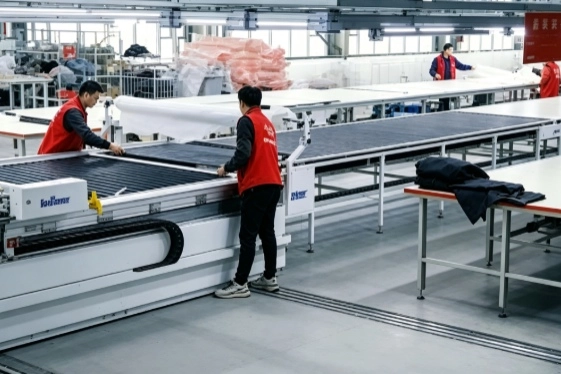
Leading supply chain models demonstrate the power of multi-country manufacturing across international trade networks. KINGSRICH operates a versatile domestic and overseas manufacturing footprint across China, Vietnam, Cambodia, and Indonesia. Facilities like Wuhan Kingsrich, Hubei E-Fashion, and Hubei Yijiemu deliver precision craftsmanship and complex garment execution within China. Overseas production units, including KRG and Dream in Vietnam alongside FPV in Cambodia, provide highly efficient and scalable capacity.
This strategic distribution balances production loads effectively across regions. KINGSRICH develops over 4,000 styles and produces more than 12,000,000 garments annually through this multi-region network. Strategic multi-region allocation secures continuous output for complex outerwear and woven collections even during unexpected regional crises.
Global brands tap into specialized regional manufacturing capabilities while maintaining continuous global reach. Combining Chinese technical expertise with competitive Southeast Asian production units optimizes labor costs and preserves operational continuity. Diversified global production solutions provide fashion executives with total control over global inventory pipelines. This resilient operational framework secures sustained brand growth against unexpected international market shocks.
Cross-border trade regulations create unique opportunities for global apparel brands to reduce operational expenses. Strategic network planning allows companies to navigate complex international trade policies efficiently.
Free trade agreements lower import duties between partner nations. Sourcing managers optimize production allocations across borders to take advantage of preferential tariff rates.
Free trade zones offer tax relief for importing raw materials and manufacturing garments. Apparel brands apply specific sourcing frameworks to meet regional trade rules:
| Rule of Origin Framework | Production Origin Requirement | Impact on Sourcing Flexibility |
|---|---|---|
| Fiber Forward | Fibers must be natural-grown or extruded inside the FTA region. | Lowest flexibility; strictly limits raw material sourcing. |
| Yarn Forward | Requires yarn spinning, fabric weaving, and assembly inside the FTA zone. | Moderate flexibility; fibers can originate anywhere. |
| Fabric Forward | Fabric production must take place within FTA territory. | High flexibility; allows non-FTA fibers and yarns. |
| Cut and Sew | Only final garment cutting and sewing occur in the FTA country. | Maximum flexibility; allows global sourcing for inputs. |
Apparel brands secure reduced tariff benefits by ensuring spinning and fabric formation occur within FTA partner countries. Companies maintain flexibility to source raw fibers globally from non-FTA countries under yarn-forward rules.
The Generalized System of Preferences grants nonreciprocal, duty-free entry for thousands of goods originating from designated developing territories. This duty elimination lowers trade barriers directly while cutting import costs for companies sourcing products from developing nations.
Under revised rules, such as Japan's GSP, knitted apparel qualifies using imported fabrics rather than requiring yarn-to-finished-product processing in a single country. Proposed expansions to include apparel under GSP for nations like Myanmar and Laos promote local industry growth. These trade programs offer cost-effective options to diversify supply networks.
Splitting manufacturing stages across borders helps brands optimize tariff classifications. Companies determine final origin status by managing specific transformation steps carefully.
Multi-country manufacturing enables brands to divide production processes across specialized locations. Importers reference 19 CFR 102.21, 102.22, or 19 U.S.C. 3592 to ensure regulatory compliance during multi-stage assembly.
Under Chapters 50–63, non-originating materials must not exceed 10% of total weight under de minimis rules. Foreign elastomeric content remains capped at 7% of total weight.
Targeting consumer markets requires precise alignment with local trade policies. Broad trends in globalisation encourage multi-stage manufacturing networks across international borders.
Under specific FTAs, non-originating goods that fail standard origin criteria obtain preferential tariff treatment within negotiated quantitative Tariff Preference Levels. Executing production in strategic locations ensures brands enter target markets with optimized duty structures.
Connecting creative design centers directly with localized production nodes accelerates overall product development cycles. Modern brands build an international presence across target regional markets to streamline fashion operations and eliminate single-country supply chain delays. This integrated operational structure empowers an apparel business to deliver fresh styles to retail shelves quickly while maintaining complete operational flexibility and high product quality across every seasonal drop.
Nearshore manufacturing facilities eliminate extended sea voyages and streamline inventory movement across key regional hubs. Operating regional production nodes gives fashion brands dynamic supply chain agility and accelerates distribution schedules across major global consumer markets. Sourcing directors minimize delivery risks by positioning manufacturing capacity close to critical retail networks.
Capturing short-lived social media trends requires rapid operational turnarounds and streamlined production schedules. Apparel companies deploy specialized physical and technological supply chain infrastructure to launch micro-trend apparel lines before consumer interest shifts:
This physical and technological network supports high-velocity product drops without creating excessive unsold stock in local distribution centers. Sourcing teams also rely on local payment networks and automated ERP accounting integrations to settle vendor invoices rapidly, reduce cross-border transfer costs, and keep active factory production lines moving continuously.
Relocating garment production closer to primary consumer markets cuts total reorder turnaround timelines by up to 50% compared to traditional Asian sourcing. Fast transit options allow buyers to replenish popular retail items within days rather than waiting weeks for standard container ships:
| Manufacturing Location | Mode of Transport | Estimated Shipping Duration |
|---|---|---|
| Mexico | Ground (Truck) | 1 to 5 Days |
| Dominican Republic | Maritime (Ocean) | 3 to 5 Days |
| Central America (CAFTA-DR) | Maritime (Ocean) | 5 to 10 Days |
| Colombia | Maritime (Ocean) | 7 to 10 Days |
Overseas logistics management improves significantly when management teams share local time zones with foreign factory supervisors. Regional hubs like Mexico offer swift overland trucking (1–5 days), drastically shortening the time required to replenish inventory in store. Shared time zones enable real-time coordination, rapid communication, and quicker decision-making between fashion brands and regional manufacturers during crucial production windows.
Linking creative conceptualization directly with practical garment manufacturing requires synchronized global communication across diverse regional facilities. A multi-country supply chain transforms abstract creative concepts into commercial garments through structured technical workflows, standardized quality controls, and specialized development centers.
Executing swift design translation requires organized development stages across specialized creative and technical facilities:
A solid international presence connects these execution stages seamlessly across different countries. KINGSRICH exemplifies this operational model by aligning distinct global hubs to execute outerwear and woven collections with exceptional technical precision:
| Global Hub | Strategic Function & Role | Contribution to Apparel Production |
|---|---|---|
| Spain Office (Barcelona) | Trend direction & early-stage design | Guides initial collection concept and design collaboration |
| Shanghai Studio | In-season development & sourcing | Drives fast-response collection execution and material sourcing |
| Wuhan R&D Center | Technical R&D & sample refinement | Enhances fabric innovation and technical development for outerwear/wovens |
The Barcelona Spain Office shapes early collection concepts and guides design collaboration for upcoming seasons. The Shanghai Studio accelerates fabric selection, in-season development, and fast-response collection execution. Meanwhile, the Wuhan R&D Center optimizes technical garment construction, sample refinement, and fabric innovation for complex outerwear and woven collections.
Fast material access prevents factory floor delays during peak production cycles and high-volume seasonal launches. Expanding regional production capabilities unlocks valuable commercial opportunities for agile fashion companies worldwide. Brands establish strategic partnerships with raw textile suppliers to secure high-quality fabrics rapidly without compromising technical specifications or brand standards. Specialized Asian hubs supply innovative textiles, while regional satellite units execute immediate cutting, sewing, and final assembly. Strategic alignment between global design studios and flexible factory locations delivers market-ready fashion lines at maximum velocity.

High-volume apparel brands scale production across regional networks to absorb volatile demand shifts. A strong international presence allows supply chain managers to distribute orders across multiple manufacturing hubs seamlessly. This strategic alignment unlocks valuable commercial opportunities while keeping output steady during major retail surges.
Peak shopping seasons test global supply chain stability. Apparel companies preserve order fulfillment by balancing primary and secondary manufacturing partners across diverse geographic territories.
Leading fashion enterprises maintain steady baseline inventory near consumer markets while deploying cross-border procurement for demand surges. Asian vertical hubs manage high-volume essential products through massive scale. European nearshore hubs offer high flexibility for low-minimum order quantity drops and quick-turnaround releases.
| Production Node Hub | Key Operational Role | Volume Scaling Strategy |
|---|---|---|
| European Nearshore Hubs | High flexibility for low-MOQ drops and rapid-turnaround releases | Quickly pivots production for viral/trending items |
| Asian Vertical Hubs | High-volume essentials manufacturing | Leverages economies of scale to expand production from hundreds to tens of thousands of units |
Factory congestion halts production schedules during holiday shipping rushes. Top garment manufacturers prevent bottlenecks by deploying targeted operational solutions across facilities:
Cross-training factory staff prevents burnout among core workers during sudden volume spikes. Deploying automated warehouse management systems optimizes item tracking and accelerates daily picking processes.
Production elasticity gives apparel brands freedom when expanding into new markets. Flexible networks adapt immediately when consumer buying patterns shift unexpectedly.
Geographic diversification prevents localized disruptions from delaying customer deliveries. Sourcing systems enable real-time rerouting of production orders when local logistics blockages occur.
Third-party logistics providers adjust warehouse space dynamically to absorb heavy inventory flows. Scalable distribution channels protect brand supply chains from severe transport delays.
Complex apparel categories require specialized technical oversight during rapid production scaling. Complex items like outerwear and woven collections demand precise fabric sourcing and advanced construction skills.
Brands distribute complex production units across specialized factory facilities to maintain total craftsmanship quality. Dividing technical assembly tasks among regional nodes increases output efficiency while protecting core product integrity across competitive target markets.
Environmental, social, and governance standards require strict corporate oversight across modern apparel networks. Concentrating manufacturing within a single territory exposes fashion enterprises to sudden regulatory updates, environmental violations, or labor compliance penalties. Localized statutory changes often force abrupt factory modifications, increasing operational expenditures and delaying seasonal collection releases.
Multi-country manufacturing protects global fashion brands against single-region regulatory shocks. Operating across diverse legal jurisdictions allows executive teams to balance regulatory requirements, distribute compliance risks, and advance sustainable fashion initiatives across regional production centers. Sourcing managers maintain steady inventory flows while adjusting factory allocations to meet evolving regional environmental laws.
Rigorous certification frameworks guarantee acceptable workplace conditions and minimal environmental impacts throughout apparel production processes. Global brand managers rely on recognized public frameworks like ISO 14001, SA8000, and the Higg Index to evaluate facility performance across international hubs. These standardized operational metrics allow executives to compare supplier compliance across different operating environments accurately.
Comprehensive third-party audits verify continuous adherence to workplace safety regulations and waste management protocols. Sourcing directors establish strategic partnerships with accredited inspection agencies to conduct routine site evaluations across all manufacturing facilities. Systematically auditing regional supplier nodes eliminates compliance blind spots, mitigates brand reputation risks, and maintains consistent manufacturing standards worldwide.
Long-distance ocean transport generates considerable greenhouse gas emissions throughout international apparel distribution networks. Moving high-volume garment production closer to primary consumer markets decreases physical shipping distances, lowers marine fuel consumption, and cuts overall freight carbon footprints. Regional production facilities reduce transport fuel burn while maintaining fast inventory delivery schedules.
Strategic regional sourcing shortens logistics transit legs and streamlines inventory pipeline management. Modern supply chain executives adopt near-sourcing frameworks to reduce reliance on long-distance air freight during unexpected demand spikes. Regionalizing distribution hubs eliminates carbon-intensive shipping routes, optimizes inventory throughput, and supports long-term corporate decarbonization targets.
Modern supply chains require complete raw material tracking from original raw fibers to finished retail products. Ongoing shifts in globalisation require complete operational visibility across raw material suppliers, yarn spinning mills, textile dye houses, and final garment assembly factories. Multi-region tracking ensures authentic raw material documentation across all global manufacturing locations.
Advanced digital tracking systems verify raw textile origin and raw material certifications at every production stage. Enterprise networks connect technical R&D hubs, material sourcing teams, and regional assembly plants using integrated software systems. Verifying material provenance through secure digital platforms guarantees compliance with international environmental directives and delivers fully traceable garment collections to retail markets.
Single-region sourcing models no longer support ambitious apparel brands in today's volatile market. Localized factory shutdowns, sudden tariff increases, and shipping bottlenecks constantly threaten fragile supply networks. High-volume fashion companies need dynamic operational flexibility to protect profit margins.
Combining global innovation hubs with flexible production networks builds long-term operational resilience. Integrated partners like KINGSRICH demonstrate this strategic synergy through dedicated design studios and production facilities across Asia. This effective multi-country manufacturing model connects early trend development directly with agile factory capacity. Apparel brands must expand their international presence to ensure reliable output and expand global reach. Executive leaders should re-evaluate their sourcing footprints today to establish a diversified supply network.
Multi-Country Manufacturing distributes garment production across facilities in different nations. Fashion brands use this strategy to avoid reliance on a single geographic region. This approach helps companies minimize supply chain risks, optimize import tariffs, and maintain continuous output during localized disruptions.
Geographic diversification prevents localized factory shutdowns, extreme weather events, or regional labor disputes from stopping global operations. Sourcing managers dynamically reallocate production volumes to active facilities in other countries, protecting core inventory pipelines and ensuring consistent product availability for retail markets.
Brands leverage preferential trade agreements, free trade zones, and programs like the Generalized System of Preferences to lower import duties. Strategic country-of-origin assignments allow companies to process materials in specific regions, optimizing duty rates and reducing overall production costs.
Connecting regional production nodes with global innovation hubs shortens transportation lead times. Proximity sourcing and nearshore facilities allow brands to respond rapidly to micro-trends, streamline prototyping cycles, and execute fast in-season reorders without waiting weeks for long-distance ocean freight.
Global Innovation Hubs handle design concepts, material development, and technical prototyping centrally. For example, KINGSRICH links creative direction in Spain, fast-response sourcing in Shanghai, and technical outerwear R&D in Wuhan directly to six manufacturing plants across Asia for seamless execution.
Integrated international networks easily scale garment output during peak seasonal demand spikes. Facilities across multiple countries balance production capacity efficiently. KINGSRICH utilizes this multi-region structure to develop over 4,000 styles and manufacture more than 12,000,000 garments annually.