 en
en  cn
cn  it
it  es
es  tr
tr  ja
ja  sv
sv  pt
pt  nl
nl  ru
ru  fr
fr  de
de  pl
pl 
Serving global fashion brands
as the core supply chain of excellence, agility, and innovation.
as the core supply chain of excellence, agility, and innovation.
07 Apr 2026 / Industry
A jacket can look simple on a product page and still be relatively expensive to manufacture. Two jackets made in the same factory, using fabrics with similar prices, can have very different production costs once their construction, material consumption, labor requirements and quality standards are compared.
That difference matters when brands evaluate a quotation. A lower quoted unit price is not directly comparable if it is based on different material specifications, construction requirements or quality standards. The same applies to production conditions. Order quantity, size and color assortment, preparation work and delivery requirements can all influence the cost of producing each garment.
Jacket manufacturing cost is therefore better understood as the result of several connected decisions: what materials the garment uses, how it is constructed, how efficiently the patterns use those materials, how much production work is required, what quality standard the finished jacket must meet and under what production conditions the order will be manufactured.
For brands developing woven jackets, understanding these factors makes it easier to assess quotations and identify where cost differences actually come from.
A jacket normally involves more production operations than a basic shirt. Even relatively straightforward styles can include an outer fabric, lining, interlining, several panels, pockets, closures and finishing operations.
The cost therefore does not come from one line item.
Consider two jackets made from fabrics with a similar purchase price. One may have a simple front construction, limited pockets and minimal lining. The other may include multiple panels, several pockets, a full lining, internal reinforcement and more demanding finishing. The second jacket requires more components and assembly work even before quality inspection is considered.
The production quantity can create another difference. A small order and a larger order may involve similar product specifications, but development, production preparation and line setup are distributed differently across the order. A manufacturer may also need to manage several colors and sizes within the same order, which can affect production planning and efficiency.
This is why jacket production cost should always be assessed against the actual product specification and production conditions. A manufacturer's quotation reflects the work required to turn that specification into a finished garment under a particular order arrangement.
For sourcing teams, this distinction is useful when comparing suppliers. If one factory quotes significantly less, the important question is not simply why the price is lower. It is whether both factories are costing the same product under the same assumptions.
Materials are usually one of the most visible components of apparel manufacturing cost, but the main fabric is only part of the calculation.
A jacket may require outer fabric, lining, interlining, padding, zippers, buttons, labels and other trims. The specification of each component affects material cost, while availability and sourcing conditions can affect both price and lead time.
The main factors worth checking include:
· Material specification: fiber composition, fabric construction, weight and other required characteristics.
· Supporting materials: lining, interlining, padding and closures can add meaningful cost depending on the jacket design.
· Availability and sourcing: difficult-to-source materials, limited availability or specific purchasing requirements can affect procurement conditions.
Material price should be separated from material consumption. A premium fabric may have a high price per meter, but a pattern with efficient utilization may use less of it. Conversely, a less expensive fabric can still contribute to a costly jacket if the pattern requires substantial yardage or has high matching requirements.
Material availability can also affect development and production planning. If the specified fabric is difficult to source consistently, the manufacturer may need to work with alternative materials or different purchasing arrangements. Any substitution should be assessed carefully because changing the material can affect the finished garment.
This is particularly relevant when comparing quotations. A quotation based on one fabric specification cannot be meaningfully compared with another based on a different fabric weight, lining or trim standard. Before looking at the unit price, brands need to make sure the material assumptions are the same.
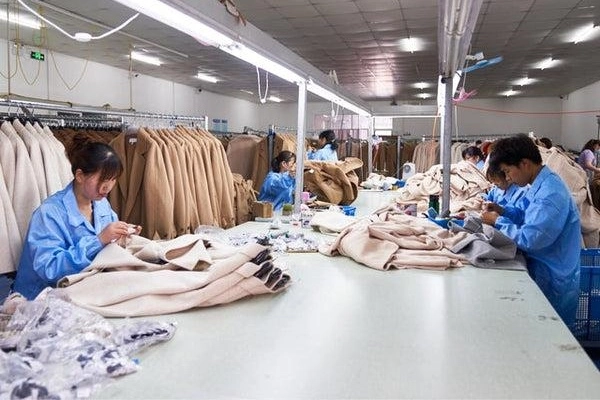
Construction is where the difference between two apparently similar jackets can become significant.
Every additional construction detail creates more work. More components have to be prepared and positioned, and additional assembly operations may be required before the garment reaches the finishing stage.
The basic relationship is straightforward:
More construction operations → more assembly work → more production time → higher manufacturing cost
A jacket with several patch pockets, for example, requires additional pocket components, preparation and stitching compared with a jacket with a simpler pocket design. A structured collar may require more preparation than a basic neckline. A fully lined jacket also involves additional assembly compared with an unlined style.
The same applies to closures. Zippers, buttons, snaps and other fastening systems can require different preparation and attachment processes. Multi-panel jackets may also need greater attention to panel positioning and seam alignment.
Jacket feature | Potential manufacturing impact |
Multiple pockets | More components, preparation and sewing operations |
Structured collar | Additional preparation and shaping |
Full lining | More assembly and finishing work |
Multiple panels | More seams and alignment requirements |
Complex closures | Additional preparation and attachment operations |
Detailed internal construction | More handling during assembly |
These details do not make a jacket unnecessarily expensive. They are often essential to its design and function. The important point is that their production implications should be understood before the specification is finalized.
For woven jacket manufacturing, construction decisions should therefore be evaluated alongside the intended appearance. A detail that is important to the product can remain, while the development team assesses whether the construction method is practical and proportionate to the intended product.
Material cost and material consumption are related, but they are not the same thing.
The amount of fabric needed for one jacket depends partly on how efficiently the garment patterns can be arranged within the available fabric width. Pattern shapes, grain direction, size range and matching requirements all influence this calculation.
Pattern efficiency becomes especially relevant when the jacket contains large panels or fabrics that require directional placement. Stripes, checks and other patterns may need to be aligned across adjoining panels, which can reduce the usable area of the fabric.
Marker efficiency also matters. A well-planned marker can make better use of the available fabric, while inefficient pattern placement can increase waste and raise the material required for each garment.
This is one reason material consumption should not be estimated from fabric price alone. Two jackets using the same fabric can require different amounts of material because their patterns are different.
For example, a jacket with relatively compact panel shapes may use fabric efficiently, while a design with large curved panels, directional fabric or strict pattern matching can require additional fabric even when the finished garment dimensions are similar.
The basic relationship is:
Fabric price per meter × material consumption per jacket = direct fabric cost per jacket
The actual costing calculation may involve additional materials and purchasing conditions, but the principle remains important: pattern development can influence how much material each finished jacket consumes.
This means material utilization should be reviewed during technical development rather than treated as a costing issue only after the pattern has been finalized.
Labor cost is influenced not only by how many garments are produced but also by the skill, control and attention required to make each garment to the specified standard.
Some jacket operations require more technical skill than straightforward seams. Structured areas, precise panel alignment, detailed finishing and certain internal construction methods may require experienced operators and closer process control.
Workmanship requirements also influence production planning. A jacket intended to meet a demanding appearance standard may require tighter control of stitching, symmetry, seam appearance, pressing and finishing.
Quality requirements can affect:
· Skill requirements: certain operations may need more experienced operators or specialized handling.
· Inspection frequency: stricter standards may require more frequent checks during production.
· Process control: critical construction or appearance points may need closer monitoring.
· Rework risk: defects that do not meet the agreed standard may require correction before garments can proceed.
The cost implication is not simply the price of inspecting the finished jacket. Quality expectations can influence how the garment is produced from the beginning.
For example, if a jacket requires precise matching between panels, production workers need to maintain that requirement during preparation and assembly. If visible stitching must remain highly consistent, the production process needs to control that detail throughout the relevant operations.
This is why two quotations based on different workmanship standards may differ even when the material specifications are similar. A price based on basic workmanship should not be compared directly with one that includes more demanding appearance and inspection requirements.
Production volume can influence jacket manufacturing cost because preparation, development work and production efficiency are distributed differently across different order quantities.
This does not mean that a larger order automatically produces a lower unit cost. The actual effect depends on the product, production setup and order conditions.
Before production begins, there may be work related to sample approval, pattern preparation, material preparation, production planning and line setup. When these activities are spread across a larger quantity of the same product, their contribution to the unit cost may be different from a small production run.
The order itself can also introduce additional variables. A jacket order may involve several sizes and colors, and each combination can affect material preparation, cutting organization and production planning.
Delivery requirements matter as well. An order requiring a compressed production schedule may create different production conditions from one with a more flexible delivery window. Production efficiency depends not only on the number of garments but also on how the order fits into the manufacturer's production planning.
For this reason, production conditions should be considered when comparing quotations.
A manufacturer may need to consider:
· Order quantity and production volume
· Number of sizes and color variations
· Production preparation and line setup
· Material availability and purchasing conditions
· Required delivery schedule
· Production efficiency under the specific order arrangement
The purpose is not to assume that one production quantity is always cheaper than another. Instead, brands should understand that unit manufacturing cost is linked to the conditions under which the order will actually be produced.
This becomes particularly important when comparing a small trial order with a larger repeat order. The product may be identical, but the manufacturing assumptions are not necessarily the same.
Some of the most important cost decisions are made before bulk production starts.
During technical development, teams can identify whether the proposed construction is practical, whether materials are being used efficiently and whether certain details create unnecessary production complexity. An integrated approach to garment development and manufacturing can make these evaluations easier by connecting technical decisions with actual production requirements.
This is not the same as choosing the cheapest option. A lower-cost material may compromise the intended appearance or performance, while removing an important construction detail may change the product itself.
A better approach is to look at the complete product specification and ask whether each technical decision supports the intended result.
For example, construction optimization may identify an alternative way to achieve the same appearance with fewer unnecessary operations. Pattern development may improve material utilization without changing the garment's fit. Material planning may identify a suitable specification that is easier to source consistently.
These decisions are more effective when made before the product is finalized. Once bulk production has started, changing construction or patterns can involve additional development work, new samples or production adjustments.
For brands, this is why cost planning should begin during technical development rather than after receiving the final production quotation. At that stage, there is still room to assess the relationship between design requirements, manufacturing operations, material consumption and production conditions.
A manufacturing quotation is more useful when the brand understands what sits behind the unit price.
When comparing suppliers, the goal should be to compare equivalent specifications rather than simply selecting the lowest number. Material specifications, construction details, expected consumption, order conditions and workmanship requirements all need to be considered before prices can be meaningfully compared.
Cost factor | What to compare |
Materials | Fabric, lining, interlining, padding, trims and closures |
Construction | Pockets, collars, cuffs, lining, panels and closure methods |
Material consumption | Expected fabric usage, pattern efficiency and matching requirements |
Production conditions | Order quantity, size and color assortment, preparation and delivery requirements |
Production work | Assembly operations, handling and finishing requirements |
Quality standard | Workmanship expectations, inspection and acceptable defect levels |
This approach also helps identify why one quotation may be higher. The difference may come from a more expensive lining, higher material consumption, additional construction operations, different order conditions or a stricter workmanship requirement.
For sourcing teams, the useful question is therefore not simply, "Which manufacturer has the lowest jacket price?" It is, "Which quotation accurately reflects the jacket we actually want to produce and the conditions under which we want to produce it?"
That distinction can prevent brands from comparing prices that appear similar but are based on different assumptions.
The main factors include material prices and availability, construction complexity, labor requirements, material consumption, pattern efficiency, order quantity, production conditions and the required quality standard. These factors work together rather than affecting cost independently.
Additional construction details generally require more components, preparation, assembly and production control. Pockets, collars, cuffs, linings, closures and multi-panel construction can all increase the work required to complete a jacket.
Fabric consumption determines how much material is required for each garment. Pattern efficiency, marker efficiency, panel shapes, fabric width and matching requirements can all affect the amount of fabric needed.
Production volume can affect unit cost because development, preparation and production efficiency are distributed differently across different order quantities. The actual effect depends on the jacket, order structure, production conditions and required delivery schedule.
Cost can be managed through technical planning rather than simply choosing cheaper materials. Reviewing construction efficiency, pattern utilization, material sourcing, order conditions and production requirements before bulk manufacturing can help identify unnecessary cost while maintaining the intended product standard.